


We use cookies to personalise content and ads, to provide social media features and to analyse our traffic. We also share information about your use of our site with our social media, advertising and analytics partners who may combine it with other information that you’ve provided to them or that they’ve collected from your use of their services.

The Most Common Hockey Injuries and How to Prevent Them
It’s widely accepted in the sports world that almost every sporting activity comes with its safety risks and that sports injuries are, unfortunately, inevitable. Field hockey and ice hockey are no exceptions. As sports first aid and physiotherapy specialists, Sterosport is passionate about empowering coaches, club managers, athletes and physios to keep their sports teams and individual players safe from accident or injury wherever possible.

In this article, we’ll discuss the most common hockey injuries that happen on the hockey field and the ice and take you through some of the best ways to prevent injury. While knowing how to treat hockey injuries in an emergency is important, prevention is always the best solution.
The Most Common Field Hockey Injuries
As part of its field hockey injury prevention efforts, the International Hockey Federation (FIH) assessed available data on reported injuries in field hockey in a report titled ‘Injury Research in Hockey’. The findings of this report revealed certain trends across the sport that correlate with widely adopted understandings of the most common injuries in field hockey.
The report found that hockey head injuries and hockey face injuries are the most common during play. Damage to the hands and fingers, including hockey wrist injury incidences, were also found to be common field hockey injuries, and injuries to the lower leg are also reported frequently. This includes field hockey knee injuries and hockey foot injuries such as ankle sprains and ligament strains.

The FIH report found that the most common causes of field hockey injuries were impact incidences with a ball or hockey stick. The data also showed that ‘male players tend to have more injuries due to collisions compared to female players’.
In summary, the report found that the vast majority of field hockey injuries are:
- Contusions (bruises)
- Sprains
- Lacerations (cuts)
- Concussion (potentially serious brain injury caused by impact to the skull)
Check out England Hockey’s Concussion Policy and Concussion Guidance for essential information about managing these serious field hockey head injuries.
The Most Common Ice Hockey Injuries
An extensive seven-year study into ‘Injuries in men’s international ice hockey’ that reviewed data from the IIHF Adult World Championship Tournaments and Olympic Winter Games found that, not dissimilarly from field hockey, the most common ice hockey injuries were:
- Lacerations (cuts)
- Sprains
- Contusions (bruises)
- Fractures
In addition to the above ice hockey injury reports, concussion is a common injury suffered by ice hockey players. Due to the high-contact nature of ice hockey, head injuries, including concussions, can often go unnoticed and pose a threat to player safety several days after the incidence of injury. While ice hockey players are required to wear protective headgear, including a regulation ice hockey helmet and face guard, impact suffered to the head poses the risk of concussion to all players.

While there is no easy solution as a means of hockey injury prevention for concussion that will do more than a well-designed, industry-approved protective helmet, referees, officials, and coaches can teach, train and enforce responsible play and encourage all players on the ice to minimise head-to-head contact to prevent the incidence of severe concussion which is considered to be a serious ice hockey brain injury.
Keen to learn more about hockey injury statistics and learn about the data? Check our Hockey and Ice Hockey Statistics article for more information about ice hockey and field hockey injuries.
How to Prevent Hockey Injuries on the Hockey Field and on the Ice Rink
Regarding safety, putting measures in place to prevent common hockey injuries is a vital part of managing both field hockey and ice hockey. The relevant governing bodies offer support and guidance to reduce the likelihood of a severe hockey injury.
England Hockey’s Guidance for Avoiding the Most Common Field Hockey Injuries
The UK’s governing body for field hockey, England Hockey, offers the following advice:
When planning for safe, fun and engaging hockey you need to consider the following best practice:
- Coaching workforce
- Facilities
- Risk Assessments
- Running safe warm-ups
- Injury reporting and monitoring
- Guidance for parents/guardians
The England Hockey Dos and Don’ts Guide covers best practices for coaches and hockey teams to follow as an essential part of hockey injury prevention. Read on to find out the essentials.
Do:
- Include a warm-up at the start of any session.
This includes a warm-up exercise before a training or practice session and formal competitive games.
Warm-ups are an essential way to prepare player’s bodies for physical activity and help to prevent a range of overuse use injuries, including field hockey knee injuries, hockey foot injuries and even a serious hockey ankle injury.
Plan the warm-up to be as fun and engaging as possible to encourage all players to participate. With that in mind, consider your group’s age, ability and specific needs when planning the warm-up. Factor in the surface and equipment used, and ensure it’s appropriate for the following activity.
Before beginning any warm-up exercises, ensure that you have enough people on hand to meet the recommended minimum supervision ratios for the size of your warm-up group.
Don’t forget to take a register of all people in attendance of the warm-up, including those supervising.
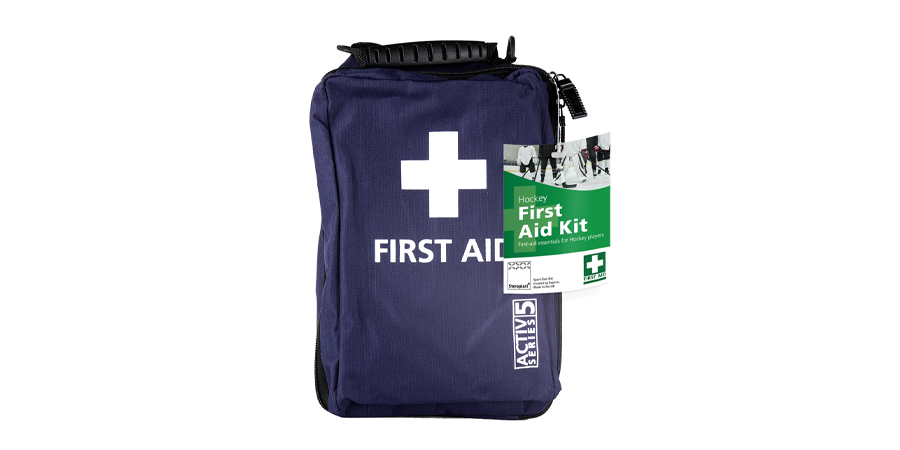
- Ensure a first aid kit is accessible at all times and make sure accident report forms are available should they be required.
Hockey clubs and sports premises are required by UK law to ensure a hockey first aid kit and qualified first aider are available at all times when a sporting activity is played. We cover the importance of having a well-stocked first aid kit for hockey and break down the essential contents on our blog.
Ensure that medical details are accessible and that parents can be contacted if required. On top of that, sports clubs and facilities must have an accessible accident report book on-site to record any accidents and injuries on the premises. This is not only to comply with British HSE laws but is necessary for coaches and club staff to monitor accidents and injuries. Responsible staff should regularly assess whether any adjustments need to be made to improve the health and safety standards of the facility.

Don’t:
- Get the hockey balls out until the start of the session, whether these are provided by the club or belong to individuals.
- Allow players to knock around or warm up on the side of the pitch before the session starts or when other activity (game or training session) is happening.
- Allow players to engage in unsupervised activity which compromises safety.
- Allow players to have stick and ball time unsupervised.
- Leave the group unsupervised whilst the warm-up is taking place.
- Allow players to stand near or behind the goal whilst other players are shooting or lose control of/ swing their stick when close to other players.
All the ‘don’t’ recommendations above are provided to ensure optimal player safety for hockey players. Some of the most avoidable and unfortunately common field hockey injuries occur when basic safety precautions aren’t taken or enforced by supervising staff, coaches and qualified first aiders.
Other Essential Considerations for Field Hockey Safety
For their own safety and that of their teammates and bystanders, all field hockey players should always ask for permission from the supervising coach before using any hockey equipment as part of the session, including sticks and balls.

It might seem common sense, but coaches, team managers and field hockey players should take their safety equipment and protective gear seriously. Wearing items such as gum shields, knee pads, gloves, and other protective pieces can significantly reduce the risk of, or at least the severity of injuries, even for the worst hockey injuries. Our blog covers everything you need to know about hockey safety equipment and field hockey and ice hockey’s governing body’s requirements.
To protect the safety of everyone on-site, club managers, premises supervisors, and coaches must ensure a suitable contingency plan if a coach is running late or doesn’t turn up.

Expert Advice for Preventing the Most Common Ice Hockey Injuries
One of the most important preventative measures ice hockey teams can take to reduce the risk of serious injury from ice hockey is wearing the right gear. Wearing essential protective equipment can protect ice hockey players from a wide range of serious injuries.
For example, a premium quality, well-fitting helmet can prevent an ice hockey neck injury and a serious concussion. And elbow pads, arm guards, and body pads can protect players from an ice hockey elbow injury or a hockey hip injury caused by a fall or impact with other players.
As well as sourcing professional-quality safety equipment, ice hockey sports physios recommend the following ice hockey injury prevention measures for some of the most frequent ice hockey injuries. We explore these below.

How to prevent ice hockey knee injuries
One of the more serious and common ice hockey knee injuries is an MCL injury. The MCL is the Medial Collateral Ligament located on the knee’s inner side, linking the shin and thigh bones. In most instances, an MCL injury is classified as a sprain caused when the knee joint is impacted by another player or a fall on the ice. It can also be caused by the joint over-twisting when their skate gets caught.
To prevent ice hockey knee injuries, including an MCL injury, ice hockey players are recommended to wear an additional knee support sleeve, protective strapping such as EAB around the joint, or sports tape. Check out our blog on applying sports tape to the knee to learn the best techniques. Of course, all players must wear all required knee pads and leg protection items that are part of their ice hockey safety equipment during all training sessions and formal matches to maximise on hockey injury prevention.
Sports physiotherapists usually recommend strength-building exercises using wobble boards or balance pads for players with a previous MCL injury to better support the joint and connected muscles, reducing the risk of further damage.
How to prevent an ice hockey groin injury
Groin injuries are commonly reported by all hockey players, not just those on the ice.
Groin strains are the most likely lower body injury hockey players can suffer from, and they can be painful as well as impact mobility and performance during play.
Sports physios and coaches alike will recommend any athlete, not just an ice hockey player, to ensure that a thorough warm-up and focused sequence of stretches takes place before any form of activity to prevent the incidence of an unpleasant hockey groin injury.

How to prevent ice hockey foot injuries
The nature of play on the ice places huge pressure and strain on hockey players’ feet. Perhaps the most common (and severe) foot trauma in ice hockey, ankle injury reports can range from a bump and bruise to a severe sprain, tear, or even a broken or fractured ankle joint.
The ice hockey skate shoe is an essential part of protecting ice hockey players’ feet and ankles. Investing in a high-quality, well-designed and properly-fitted pair of ice hockey skates is essential. Warm-up exercises and training sessions should incorporate foot and ankle joint stretches and strength-building sequences regularly.
For ice hockey players vulnerable to hockey foot injuries, check out our article on how to strap your ankle for the best tips on applying sports tape the most effectively to protect that area from over-extension.
Get in Touch
- Sarah Perris — HerACLJourney — Injury Rehab Network
- Pitchside to Ringside: Essential First Aid Kits for Contact Sports
- Simon Shepard — The Challenges of Cricket — Injury Rehab Network
- Helena Walker — Working in Academy Rugby Union: The Highs, Lows & Everything in Between — Injury Rehab Network
- Dr Adam White — Brain Health – Current Evidence and Strategies — Injury Rehab Network
- Prof James Hull — Breathing to Win — Injury Rehab Network
- Mark Leather — Professional Football Medical Support Q&A — Injury Rehab Network
- Mike James — Rebooting Robot Rehab — Injury Rehab Network
- Mike Davison — Organisational Design Principles — Injury Rehab Network
- Professor John Ryan — Abdominal Injuries in Sport — Injury Rehab Network
- Dr Rebecca Robinson — Exercise, Medicine and Cancer — Injury Rehab Network
- Dr David White — Exercise Induced Leg Pain — Injury Rehab Network
- Professor Joideep Phadnis – Treatment and Management of Elbow Injuries – Injury Rehab Network
- 2026 Injury Rehab Network Events
- Professor Robert Galloway – Reducing Medical Errors – Injury Rehab Network
- Steven Corbett – Management and Treatment of Shoulder Injuries in Sport – Injury Rehab Network
- Ali Emery – Sport Rehab & Medical Provision in UK Ice Hockey – Injury Rehab Network
- Dr Josh Berkowitz – Haematology in Sports Medicine – Injury Rehab Network
- Dr John Rogers – Bone Stress Injuries – Injury Rehab Network
- Dr Jon Houghton – Tendon Injuries – Injury Rehab Network
- Dr Andrew Harrison – Fracture Management – Injury Rehab Network
- Nick Metcalfe – Hamstring injuries: Lumbar spine and Pelvis considerations – Injury Rehab Network
- Nick Worth – The Medico-Legal Field in Elite Football/ Sports – Injury Rehab Network
- Dr Nicola Keay – Health and Hormones in the Master’s Athlete Age Group – Injury Rehab Network
- Female Athlete Health – Injury Rehab Network
- Dr Geoff Davies – Behind the Scenes with the WRU and British & Irish Lions Team Doctor – Injury Rehab Network
- Douglas Hammond – Facial Injuries in Sport – Injury rehab Network
- 2025 Injury Rehab Network Events
- Claire Robertson – Patellofemoral Update – Injury Rehab Network
- Colin Lewin – Soft Skills in Professional Sport – Injury Rehab Network
- Des Ryan – Youth Athletic Development – Injury Rehab Network
- Dr Carly McKay – Injury prevention in rugby and football: are we making any progress? – Injury Rehab Network
- Micki Cuppett – Clinical Pearls to Enhance Your Medical Examination Skills – Injury Rehab Network
- Dr. Ian Beasley – Ex-footballers Healthcare – Injury Rehab Network
- Siobhan O’Donovan — Busting Booby Traps — Injury Rehab Network
- Angela Jackson — Integrating Neurocognitive Rehab in to Return to Sport Protocols — Injury Rehab Network
- Dr Andrew Shafik — Working as a Doctor in English Football — Injury Rehab Network
- Dr Nicola Keay — Relative Energy Deficiency in Sport (REDs) — Injury Rehab Network
- Ian Hunt – Modern Management of Chest, Rib and Sternal Injuries in the Elite Athlete – Injury Rehab Network
- Dr Amit Mistry – Mental Health Challenges in Elite Sport – Injury Rehab Network
- Head Injuries and Sport
- Gerard Greene – Male Athletic Pelvic Health – Injury Rehab Network
- Geraint Griffiths – The Prevention of and Rehabilitation from Visually Related Sporting Morbidity – Injury Rehab Network
- Professor David Lloyd – Surgery for Groin Pain – The Lloyd Release Procedure – Injury Rehab Network Event
- 2024 Injury Rehab Network Events
- Jonathan Bell FRCS (ORTH) – Meniscus Tears and other Complex Injuries of the Knee – Injury Rehab Network
- Professor Rowena Johnson – Imaging of Groin and Hip Pain in Athletes – Injury Rehab Network
- Prehab & Rehab in Elite/ Professional Football – Injury Rehab Network Event
- Steve Phillips – Calf Muscle Injuries – Injury Rehab Network Event
- Grant Downie OBE – Maximising your Impact in the VUCA World of Professional Football – Injury Rehab Network Event
- Manchester FA and Sterosport Partnership Aims for Manchester to be the Safest Place to Play
- Dr Marwan Al-Dawoud – Concussion in Rugby – Injury Rehab Network Event
- How to Strap Your Ankle
- John Dickinson – Optimising Care for Asthma and Disordered Breathing Patterns in Athletes – Injury Rehab Network Event
- How to Apply Sports Tape to Your Knee
- Dr Wayne Diesel – My Long Walk to Retirement – Injury Rehab Network Event
- Rugby Union and Rugby League Mandatory Medical Equipment : 2023 Update and What to Buy
- Leanne Simoncelli – Optimising and Individualising ACLR Rehabilitation – Injury Rehab Network Event
- Lessons from Working in Elite Football – Injury Rehab Network February 2023
- The Most Common Hockey Injuries and How to Prevent Them
- How to Treat Common Hockey Injuries
- Andy Williams – ACL Reconstruction in Professional Athletes – A Surgeon’s Perspective – Injury Rehab Network Event
- Steve Simbler MRPharm.S – Medicines Management in Sport – Injury Rehab Network Event
- Hockey and Ice Hockey Injury Statistics
- Essential Hockey Safety Equipment
- How to Perform a Risk Assessment for Sports: The Ultimate Guide (Including Examples and Template)
- How to Treat Common Cycling Injuries
- Preventing Common Cycling Injuries
- Professor Iain Hutchison – Sporting Facial Injuries and Treatment Delivering Speedy Recovery – Injury Rehab Network Event
- Hockey First Aid Kit Contents List
- Hockey First Aid Kits
- How to Treat Common Netball Injuries
- Gary Bloom – Why do Players Suddenly Experience a Catastrophic Loss of Form – Injury Rehab Network Event
- Dr Monna Arvinen-Barrow – Rehabilitation of the Biopsychosocial Athlete – Injury Rehab Network Event
- How Can Common Netball Injuries be Prevented?
- First Aid Qualifications for Netball
- Netball First Aid Kits
- Netball First Aid Kit Contents List
- 2023 Injury Rehab Network Events
- Essential Safety Equipment for Cricketers
- Fiona Rosamond – Podiatry in Football – Injury Rehab Network Event
- Essential First Aid Skills for Cricket Coaches
- Common Cricket Injuries and How to Avoid Them
- Dr Carl Todd – Osteopathy in Football – Injury Rehab Network Event
- Dr Andrew Newton – Grass Roots Paediatric Sports Medical Issues – Injury Rehab Network
- Tom Parry – Nutrition in Premier League Football – Injury Rehab Network Event
- Cricket First Aid Kit Contents List
- A Guide to Cricket First Aid Kits
- Treatment and Prevention of Cauliflower Ear
- How to Treat Common Rugby Injuries
- Rugby First Aid Courses: Everything you Need to Know
- The Definitive Rugby First Aid Kit Contents List
- Taping Your Wrists for Football: Why and How
- Effective Prevention of Injuries in Football
- How to Treat Common Football Injuries
- Rugby First Aid Kits: Complete Guidance for Rugby Union and Rugby League
- Knee Injuries in Professional Football and Elite Sport – Injury Rehab Network Event
- Steve Kemp – Lateral Ankle Injuries in Professional Football – Injury Rehab Network Event
- Michael Blackie BDS – Oral Health Impact on Performance in Elite Sport
- The Best Football First Aid Courses Recommended by Experts – Courses your coaches should be taking and why
- Football First Aid Kit Contents List – What should yours contain to keep your football players safe?
- Boxing First Aid Kit Contents List
- Preventing and Treating Shin Splints
- 8 Essential Safety Tips for Boxing
- How to Apply Boxing Hand and Wrist Wraps
- Essential Boxing Safety Equipment
- How to Spot and Treat an ACL Tear
- How to Treat a Pulled Hamstring
- How to Treat a Groin Strain
- How to Treat a Sprained Ankle
- Essential Parts of Any Sports First Aid Kit
- Recommended First Aid Courses for Sport
- Essential First Aid Skills for Cyclists
- Cycling First Aid Kit Contents List
- Cycling First Aid Kits – A Complete Guide
- Mike Healy – Pitchside Care CPD – Injury Rehab Network Event
- David Fevre – Pitch Side Injuries: No Time to be Injured – Injury Rehab Network Event
- Diane Ryding – Physiotherapy in an Elite Football Academy: Beyond injuries – Injury Rehab Network Event
- The Strain of Christmas – A Busy Time for Physio’s
- Dr Imtiaz Ahmad: Football Club Doctor – An Evolving Role – Injury Rehab Network Event
- Diane Ryding & David Fevre at the Injury Rehab Network
- GB Maxibasketball and Sterosport Partnership Announcement
- Sterosport and FMPA Partnership Announcement
- 2022 Injury Rehab Network Events
- Dr Ian Horsley, Team GB Deputy Chief Physio, at the Injury Rehab Network
- Sign Up: Sports Taping and Kinesiology Taping Online Courses
- Dr Barry Monk – Sunshine and Skin Cancer – Injury Rehab Network Event
- Steve Miller – Calf Injury Rehabilitation – Injury Rehab Network Event
- Angela Jackson – Managing The Overloaded Younger Athlete – Injury Rehab Network Event
- Shoulder Injuries in Sport – Expert Q&A Injury Rehab Network Event
- Professor Bill Ribbans – The Athletic Ankle. When do Lax Ligaments Need Surgery? – Injury Rehab Network
- Diane Ryding – Tackling Paediatric Injuries – Injury Rehab Network
- What are the most common sports injuries? Top Ten (Part 2)
- What are the most common sports injuries? Top Ten (Part 1)
- The Athletes Shoulder – The Surgeons Perspective – Injury Rehab Network Event
- Dr Claire Minshull – Getting Efficacious About Rehab and Conditioning – Injury Rehab Network Event
- How to Conduct a Risk Assessment for the Return to Sport
- Return to sport: A complete guide on what to expect
- Types of Sports Tape and their Uses
- Gary Lewin, Expert Football Physiotherapist – Rehabilitation on the Road in Elite Sport – Injury Rehab Network Event
- Josh Quigley at the Injury Rehab Network
- 2021 Injury Rehab Network Events
- The Importance of the Partnership Between a Manager and a Physio
- Paul Lubas – The Pitch-Side Paramedic
- Returning to Work as a Sports Therapist After Coronavirus
- Hyde United FC and Sterosport Partnership Announcement
- Chorley FC and Sterosport Partnership Announcement
- British American Football and Sterosport Partnership Announcement
- Dave Fevre – Expert Chartered Sports Physiotherapist – Injury Rehab Network Event
- Does Kinesiology Tape Work?
- Here To Help When You Return To Sport
- Mike James at the Injury Rehab Network
- Hannah Dines Shares Details About Her Paralympic Cycling Programme
- Hannah Dines – Hills Thrills and No Chills on the Road to Tokyo 2020
- Dave Fevre at the Injury Rehab Network
- Hannah Dines – When an Athlete Switches Off
- Hannah Dines – Life Balance – How Friends Are Key to Elite Success
- University of Salford Sports Taping Courses
- Hannah Dines – Love Island, Laundry, Admin and Repeat – A Day in the Life of a Paralympian
- Injured? Here’s How Nutrition Can Help
- Sterosport – A New Approach to Sports Injuries
- Hannah Dines – Terminating Injury
- Injury Rehab Network NW Gets off to a Flying Start