


Prof James Hull — Breathing to Win — Injury Rehab Network

In our latest Injury Rehab Network event hosted by Sterosport and BASRaT, we had the privilege of welcoming Professor James Hull to discuss a critically overlooked area of sports medicine: athlete respiratory health.
As a respiratory physician at the Royal Brompton Hospital and the Institute of Sport, Exercise and Health (ISEH), Professor Hull has spent years helping elite athletes—including the UK Sports Institute and the GB Rowing team—overcome performance-limiting breathing issues.
From the chronic misdiagnosis of asthma to the hidden impact of upper respiratory infections, Professor Hull shared invaluable advice for any practitioner working with athletes.
The online event took place on the evening of Monday, 27th April, with 270 practitioners in attendance. The recording is online here

Prof (Hon.) James Hull, PhD, FRCP, FACSM, Respiratory Physician
Prof (Hon.) James Hull, PhD, FRCP, FACSM, is a respiratory physician at the Royal Brompton Hospital and leads a sports pulmonology service at the Institute of Sport, Exercise and Health (ISEH), UCL, London. His clinical and research interests are centred on helping athletic individuals overcome sports-related respiratory issues. He is an advisor to the International Olympic Committee, the UK Sports Institute, Team GB, and several elite sporting organisations, including EF Pro Cycling.
Here are the key takeaways from Professor Hull’s insightful presentation.
Breathing to Win: helping athletic individuals overcome respiratory problems
The Hidden Cost of Respiratory Issues
While hamstring tears and ACL ruptures often dominate the sports medicine conversation, respiratory illness is actually the biggest performance threat and cause of lost training days in elite athlete cohorts. In fact, an analysis of funded athletes over a single Olympic cycle revealed that respiratory illnesses accounted for almost 11 years of lost training days.
Despite this, respiratory health is often misunderstood. The lung is the first port of call for noxious inhalants—like cold air, pollution, and highly chlorinated pools—meaning athletes are subjected to immense respiratory stress.

“Think Beyond What Athletes Report”
One of Professor Hull’s most essential, take-home messages was to not take an athlete’s self-reported breathing symptoms at face value.
- Nearly 95% of the time, athletes present with breathing issues, they have been incorrectly labelled as having an asthma-related problem and given an inhaler.
- Studies show that asking athletes if they wheeze, cough, or get breathless is an incredibly poor predictor of actual exercise-induced asthma.
- Professor Hull noted that you might as well toss a coin to diagnose asthma based purely on what an athlete tells you.
When an athlete mentions their “asthma” is acting up, practitioners should always ask how it was officially diagnosed, as it is frequently just assumed rather than objectively tested.
Asthma vs EILO: Getting the Diagnosis Right
When an athlete struggles with their breathing during intense exercise, the true cause usually falls into one of three categories: Asthma, a Breathing Pattern Disorder (BPD), or Exercise-Induced Laryngeal Obstruction (EILO).
Understanding the timing of the symptoms is crucial:
- Asthma: Drops in lung function and airway narrowing typically manifest after exercise. Athletes often feel their chest tighten and begin coughing after stopping exercise.
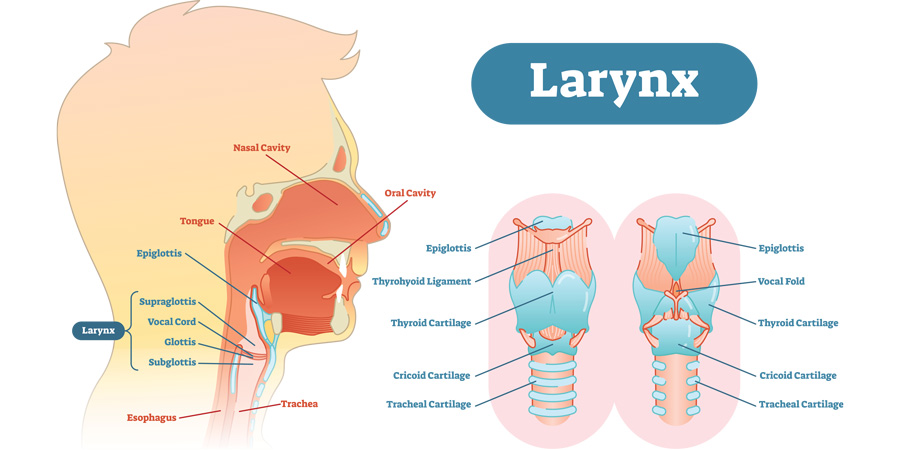
- EILO: This condition involves the structures of the voice box closing in and causing turbulence.
EILO is characterised by a loud inspiratory wheeze (noise when breathing in) that peaks during maximum exertion—such as a sprint finish or attacking a steep incline. It usually settles quickly once the intense effort stops.
The Power of the “Selfie” Assessment
If you want to understand an athlete’s breathlessness, Professor Hull highly recommends asking them to take a video selfie on their phone while they are experiencing symptoms under extreme physiological stress.
A quick video can give practitioners immediate insight into where in the breathing cycle the problem is occurring, whether there is an audible inspiratory wheeze, and what the athlete’s chest and shoulder mechanics look like during the effort.
Adopting the “Treatable Traits” Model
Athletes rarely suffer from just one isolated respiratory issue. In screening programs involving elite squads, at least 60% of athletes had two or more concurrent respiratory problems.
Because of this, Professor Hull advocates for a “Treatable Traits” model. Simply confirming an asthma diagnosis and handing over an inhaler is rarely enough. Practitioners need to systematically assess and manage multiple factors at once, including:
- Sinonasal problems and allergies.
- Airway reflux and gastrointestinal issues.
- Breathing pattern abnormalities are especially prevalent in swimmers and rowers due to the complex, concurrent demands placed on their thorax.
- Psychological factors like stress and anxiety.
Take Home Messages
James provided a recap of the take-home messages covered earlier in his presentation:
- Think beyond what an athlete tells you about their breathing.
- Always ask the breathless, wheezy athlete to take a ‘selfie.’
- Think = treatable traits.
A huge thank you to Professor James Hull for sharing his time and expertise with us, and to everyone who tuned in from around the world.
You can join us for our next Injury Rehab Network event on the 11th of May, where Dr Adam White from the Professional Football Association will be discussing the current evidence surrounding brain health in sport. We look forward to seeing you there!
Further information and follow Professor James Hull, Respiratory Physician
Breathe to Win Website
Breathe to Win X
Breathe to Win Instagram
Presentation Recording
The recording of Professor Hull’s presentation is online here
2026 Injury Rehab Network events
You can join us for our next Injury Rehab Network event on 11 May at 7pm, where Dr Adam White from the Professional Footballers Association will be discussing the current evidence surrounding brain health in sport. We look forward to seeing you there!
Find out about and register your interest for all the Injury Rehab Network events with BASRaT planned for 2026
Please enter your details into the form below, along with any questions or comments, and a member of our team will be happy to provide you with more information:
Get in Touch


Related Insights
 Basketball
Sarah Perris — HerACLJourney — Injury Rehab Network
On Wednesday, 2 September, the Injury Rehab Network welcomed Sarah Perris, Founder of HerACLJourney, alongside...
 Basketball
Pitchside to Ringside: Essential First Aid Kits for Contact Sports
Guest Article written by Combat Sports Hygiene There's a crucial moment every contact sport shares...
 Basketball
Simon Shepard — The Challenges of Cricket — Injury Rehab Network
The latest Injury Rehab Network event, delivered in partnership between BASRaT and Steroplast Healthcare, welcomed...