


We use cookies to personalise content and ads, to provide social media features and to analyse our traffic. We also share information about your use of our site with our social media, advertising and analytics partners who may combine it with other information that you’ve provided to them or that they’ve collected from your use of their services.
How to Spot and Treat an ACL Tear
An ACL tear means putting a stop to sports and could even require reconstructive surgery. Leaving an ACL tear untreated could cause it to get worse and compromise the knee joint.
To athletes training for a race, marathon, or game an ACL ligament tear can delay training and even put you out of action long-term. Early treatment is vital to help your body recover and let you get back to sports.
Here’s how to diagnose and treat an ACL tear to protect and take care of your knee joints.
Read our other guides on preventing and treating common musculoskeletal sports injuries:
- How to Treat Ankle Sprains
- How to Treat Groin Strains
- How to Treat a Pulled Hamstring
- Preventing and Treating Shin Splints
What is an ACL tear?

The ACL (anterior cruciate ligament) is a strong band of ligament tissue that helps to hold your thigh bone and shin bone together. The ACL is a very important component of the leg structure as it helps to stabilise the knee joint.
Even a partial ACL tear can be dangerous. When the ACL is compromised it can lead to chronic ACL deficiency. The knee can start to slide abnormally, damaging cartilage and causing weakness in the joint. An ACL tear can even lead to osteoarthritis.

ACL tears occur as a result of many different sports including rugby, football, tennis, squash, and skiing. Actions like sudden unusual movements, landing jumps incorrectly, and getting tackled can all lead to an ACL tear.
How to Diagnose ACL Tear
You should visit your GP if you suspect you have a torn ACL. They will be able to confirm this with a diagnosis and recommend the best steps forward. Your doctor will perform some tests to determine whether you have an ACL tear, including:
- A physical exam where your doctor will check how your knee joint moves in comparison to your other, uninjured knee. They may also perform a Lachman test or anterior drawer test to check the range of motion and how well the joint works, and ask you questions about how it feels.
- X-ray exam where your doctor can rule out a fracture or broken bone.
- MRI scan that will show your tendons and soft tissues and allow your doctor to check the extent of the damage.
- Ultrasound scan to assess the ligaments, tendons, and muscles.
If your injury is mild you might not have torn the ACL and only stretched it. ACL injuries are graded to determine their severity as follows.
| Grade | Symptoms |
| Grade 1 ACL injury | Mild damage, mild pain or discomfort. The ligament is overstretched by not torn. The stability of the knee is hardly affected. |
| Grade 2 ACL injury | Moderate damage, moderate pain. The ligament is overstretched and partially torn. |
| Grade 3 ACL tear | Severe damage, severe pain. The ligament is completed torn. Most grade 3 ACL tears require surgery. |
ACL Tear Symptoms
There might be indicators that you have torn the ACL in your knee. It’s useful to check for the following signs to determine whether your injury is an ACL tear and not something else like a pulled hamstring.
Although it’s important to get a diagnosis from your doctor to get treated early if you do have one. If left untreated, an ACL tear can seriously affect your movement.
So, where do you feel an ACL tear and what does an ACL tear look like?
- You might hear or feel a ‘popping’ sensation in your knee.
- You might experience a weak feeling in your knee and it might ‘give way’ when you put weight on it. You might also have a general loss of motion.
- Following an ACL tear, swelling will occur rapidly around the knee.
- You will likely experience pain ranging from mild to severe. The pain will be localised in the centre of your knee.
ACL Tear Treatment

Following an examination by your doctor, you will be advised on the best treatment for an ACL tear. Your age, overall health, lifestyle, and the severity of your injury will impact the ACL tear management you require.
Early ACL tear therapy is important as it can help to ease pain and swelling, and take the pressure off the injured area in the moments after the injury occurs. Use the RICE method to help an ACL tear in the first few days following the injury.
- R: rest. Immediately cease physical activity and keep off the injured knee as much as you can.
- I: ice. Apply an ice pack to the area for 20 minutes every two to three hours for the first few days.
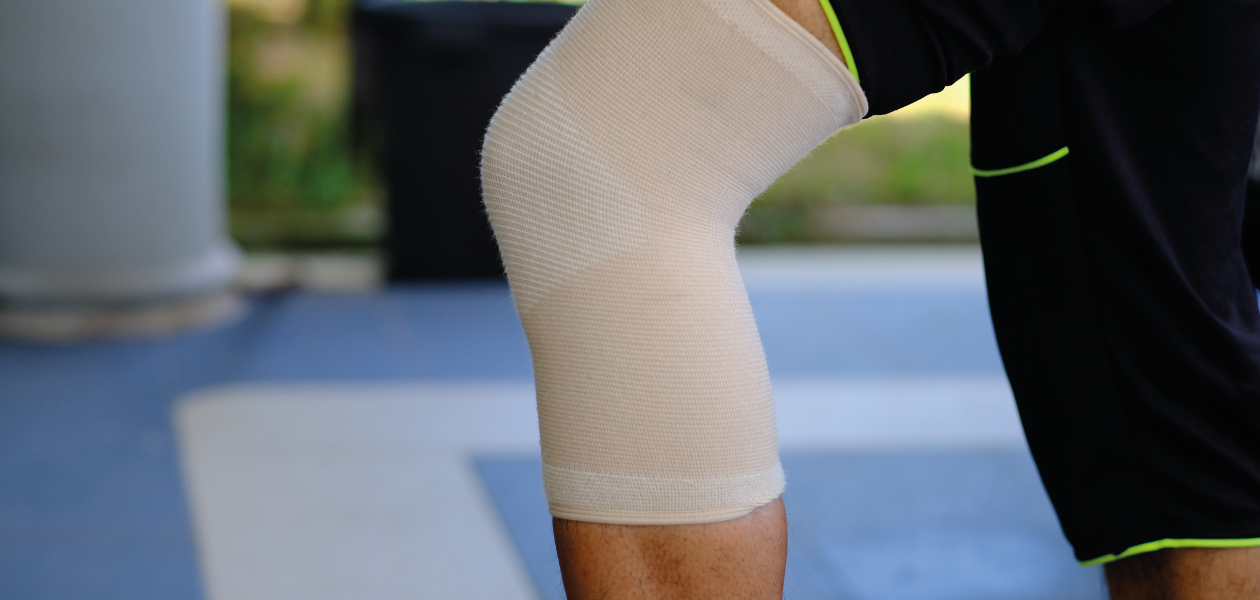
- C: compression. Wrap the knee in zinc oxide tape or wear a knee brace to help reduce inflammation.
- E: elevate. To ease swelling, elevate the knee above the level of your heart by laying down and using cushions.
Icing the Knee
Use a bag of ice or peas wrapped in a towel to ice the knee and do not apply ice directly to the skin. If you’re out and about when the injury strikes you won’t have access to some ice. This is a particular problem for athletes and sportspeople who train outdoors.
That’s why we suggest carrying an instant ice pack as part of your first aid kit when training. The Sterofreeze Ice Pack only needs to be squeezed and shaken to activate its cooling effect. When injury strikes you have an instant ice pack to hand.
Instant ice packs aren’t just used for soothing ACL injuries, they can also be used for how to treat ACL tear groin strains, ankle sprains, and other soft tissue injuries.
Compressing the Injured Knee
Tape a knee using zinc oxide tape which is robust, non-stretchy, and capable of fully immobilising your knee joint.
Wrapping an injured knee so that the joint is immobilised leads many people to wonder ‘can you walk with an ACL tear?’ Wearing wrap or a brace on your knee certainly will help to support it if you need to move around, but take care not to put too much weight on it in the first few days unless completely necessary.
But sometimes using the RICE method and resting your injured knee isn’t enough to help the ligament heal. So, how do you treat an ACL tear that won’t heal on its own? Usually, this is when the injury required surgery.
ACL injuries often come with damage to other ligaments, tendons, and muscles in the same area, and so you may need to consult a physiotherapist or doctor for an intensive course of physical therapy to help you strengthen the joint again.
Surgery is sometimes required to treat an ACL tear. You may receive arthroscopic surgery which is a less invasive form of surgery. Surgery should be followed up with an intensive course of physical therapy.
Be Prepared for Sports Injuries with Sterosport

We want everyone to feel confident playing sports and that means knowing what to do when someone gets injured. We believe that the best ways to prepare for any eventuality are with the right equipment and the right training.
Our website is full of great resources to help you find the right sports first aid courses, put together a sports first aid kit, and continually develop your knowledge of sports rehabilitation. To make life easier for players, athletes, and coaches, we offer a professionally put together sports first aid kit including all of the essentials needed in line with national governing body requirements.
Please enter your details into the form below along with any questions or comments and a member of our team will be happy to provide you with more information:
Get in Touch
- Mark Leather — Professional Football Medical Support Q&A — Injury Rehab Network
- Mike James — Rebooting Robot Rehab — Injury Rehab Network
- Mike Davison — Organisational Design Principles — Injury Rehab Network
- Professor John Ryan — Abdominal Injuries in Sport — Injury Rehab Network
- Dr Rebecca Robinson — Exercise, Medicine and Cancer — Injury Rehab Network
- Dr David White — Exercise Induced Leg Pain — Injury Rehab Network
- Professor Joideep Phadnis – Treatment and Management of Elbow Injuries – Injury Rehab Network
- 2026 Injury Rehab Network Events
- Professor Robert Galloway – Reducing Medical Errors – Injury Rehab Network
- Steven Corbett – Management and Treatment of Shoulder Injuries in Sport – Injury Rehab Network
- Ali Emery – Sport Rehab & Medical Provision in UK Ice Hockey – Injury Rehab Network
- Dr Josh Berkowitz – Haematology in Sports Medicine – Injury Rehab Network
- Dr John Rogers – Bone Stress Injuries – Injury Rehab Network
- Dr Jon Houghton – Tendon Injuries – Injury Rehab Network
- Dr Andrew Harrison – Fracture Management – Injury Rehab Network
- Nick Metcalfe – Hamstring injuries: Lumbar spine and Pelvis considerations – Injury Rehab Network
- Nick Worth – The Medico-Legal Field in Elite Football/ Sports – Injury Rehab Network
- Dr Nicola Keay – Health and Hormones in the Master’s Athlete Age Group – Injury Rehab Network
- Female Athlete Health – Injury Rehab Network
- Dr Geoff Davies – Behind the Scenes with the WRU and British & Irish Lions Team Doctor – Injury Rehab Network
- Douglas Hammond – Facial Injuries in Sport – Injury rehab Network
- 2025 Injury Rehab Network Events
- Claire Robertson – Patellofemoral Update – Injury Rehab Network
- Colin Lewin – Soft Skills in Professional Sport – Injury Rehab Network
- Des Ryan – Youth Athletic Development – Injury Rehab Network
- Dr Carly McKay – Injury prevention in rugby and football: are we making any progress? – Injury Rehab Network
- Micki Cuppett – Clinical Pearls to Enhance Your Medical Examination Skills – Injury Rehab Network
- Dr. Ian Beasley – Ex-footballers Healthcare – Injury Rehab Network
- Siobhan O’Donovan — Busting Booby Traps — Injury Rehab Network
- Angela Jackson — Integrating Neurocognitive Rehab in to Return to Sport Protocols — Injury Rehab Network
- Dr Andrew Shafik — Working as a Doctor in English Football — Injury Rehab Network
- Dr Nicola Keay — Relative Energy Deficiency in Sport (REDs) — Injury Rehab Network
- Ian Hunt – Modern Management of Chest, Rib and Sternal Injuries in the Elite Athlete – Injury Rehab Network
- Dr Amit Mistry – Mental Health Challenges in Elite Sport – Injury Rehab Network
- Head Injuries and Sport
- Gerard Greene – Male Athletic Pelvic Health – Injury Rehab Network
- Geraint Griffiths – The Prevention of and Rehabilitation from Visually Related Sporting Morbidity – Injury Rehab Network
- Professor David Lloyd – Surgery for Groin Pain – The Lloyd Release Procedure – Injury Rehab Network Event
- 2024 Injury Rehab Network Events
- Jonathan Bell FRCS (ORTH) – Meniscus Tears and other Complex Injuries of the Knee – Injury Rehab Network
- Professor Rowena Johnson – Imaging of Groin and Hip Pain in Athletes – Injury Rehab Network
- Prehab & Rehab in Elite/ Professional Football – Injury Rehab Network Event
- Steve Phillips – Calf Muscle Injuries – Injury Rehab Network Event
- Grant Downie OBE – Maximising your Impact in the VUCA World of Professional Football – Injury Rehab Network Event
- Manchester FA and Sterosport Partnership Aims for Manchester to be the Safest Place to Play
- Dr Marwan Al-Dawoud – Concussion in Rugby – Injury Rehab Network Event
- How to Strap Your Ankle
- John Dickinson – Optimising Care for Asthma and Disordered Breathing Patterns in Athletes – Injury Rehab Network Event
- How to Apply Sports Tape to Your Knee
- Dr Wayne Diesel – My Long Walk to Retirement – Injury Rehab Network Event
- Rugby Union and Rugby League Mandatory Medical Equipment : 2023 Update and What to Buy
- Leanne Simoncelli – Optimising and Individualising ACLR Rehabilitation – Injury Rehab Network Event
- Lessons from Working in Elite Football – Injury Rehab Network February 2023
- The Most Common Hockey Injuries and How to Prevent Them
- How to Treat Common Hockey Injuries
- Andy Williams – ACL Reconstruction in Professional Athletes – A Surgeon’s Perspective – Injury Rehab Network Event
- Steve Simbler MRPharm.S – Medicines Management in Sport – Injury Rehab Network Event
- Hockey and Ice Hockey Injury Statistics
- Essential Hockey Safety Equipment
- How to Perform a Risk Assessment for Sports: The Ultimate Guide (Including Examples and Template)
- How to Treat Common Cycling Injuries
- Preventing Common Cycling Injuries
- Professor Iain Hutchison – Sporting Facial Injuries and Treatment Delivering Speedy Recovery – Injury Rehab Network Event
- Hockey First Aid Kit Contents List
- Hockey First Aid Kits
- How to Treat Common Netball Injuries
- Gary Bloom – Why do Players Suddenly Experience a Catastrophic Loss of Form – Injury Rehab Network Event
- Dr Monna Arvinen-Barrow – Rehabilitation of the Biopsychosocial Athlete – Injury Rehab Network Event
- How Can Common Netball Injuries be Prevented?
- First Aid Qualifications for Netball
- Netball First Aid Kits
- Netball First Aid Kit Contents List
- 2023 Injury Rehab Network Events
- Essential Safety Equipment for Cricketers
- Fiona Rosamond – Podiatry in Football – Injury Rehab Network Event
- Essential First Aid Skills for Cricket Coaches
- Common Cricket Injuries and How to Avoid Them
- Dr Carl Todd – Osteopathy in Football – Injury Rehab Network Event
- Dr Andrew Newton – Grass Roots Paediatric Sports Medical Issues – Injury Rehab Network
- Tom Parry – Nutrition in Premier League Football – Injury Rehab Network Event
- Cricket First Aid Kit Contents List
- A Guide to Cricket First Aid Kits
- Treatment and Prevention of Cauliflower Ear
- How to Treat Common Rugby Injuries
- Rugby First Aid Courses: Everything you Need to Know
- The Definitive Rugby First Aid Kit Contents List
- Taping Your Wrists for Football: Why and How
- Effective Prevention of Injuries in Football
- How to Treat Common Football Injuries
- Rugby First Aid Kits: Complete Guidance for Rugby Union and Rugby League
- Knee Injuries in Professional Football and Elite Sport – Injury Rehab Network Event
- Steve Kemp – Lateral Ankle Injuries in Professional Football – Injury Rehab Network Event
- Michael Blackie BDS – Oral Health Impact on Performance in Elite Sport
- The Best Football First Aid Courses Recommended by Experts – Courses your coaches should be taking and why
- Football First Aid Kit Contents List – What should yours contain to keep your football players safe?
- Boxing First Aid Kit Contents List
- Preventing and Treating Shin Splints
- 8 Essential Safety Tips for Boxing
- How to Apply Boxing Hand and Wrist Wraps
- Essential Boxing Safety Equipment
- How to Spot and Treat an ACL Tear
- How to Treat a Pulled Hamstring
- How to Treat a Groin Strain
- How to Treat a Sprained Ankle
- Essential Parts of Any Sports First Aid Kit
- Recommended First Aid Courses for Sport
- Essential First Aid Skills for Cyclists
- Cycling First Aid Kit Contents List
- Cycling First Aid Kits – A Complete Guide
- Mike Healy – Pitchside Care CPD – Injury Rehab Network Event
- David Fevre – Pitch Side Injuries: No Time to be Injured – Injury Rehab Network Event
- Diane Ryding – Physiotherapy in an Elite Football Academy: Beyond injuries – Injury Rehab Network Event
- The Strain of Christmas – A Busy Time for Physio’s
- Dr Imtiaz Ahmad: Football Club Doctor – An Evolving Role – Injury Rehab Network Event
- Diane Ryding & David Fevre at the Injury Rehab Network
- GB Maxibasketball and Sterosport Partnership Announcement
- Sterosport and FMPA Partnership Announcement
- 2022 Injury Rehab Network Events
- Dr Ian Horsley, Team GB Deputy Chief Physio, at the Injury Rehab Network
- Sign Up: Sports Taping and Kinesiology Taping Online Courses
- Dr Barry Monk – Sunshine and Skin Cancer – Injury Rehab Network Event
- Steve Miller – Calf Injury Rehabilitation – Injury Rehab Network Event
- Angela Jackson – Managing The Overloaded Younger Athlete – Injury Rehab Network Event
- Shoulder Injuries in Sport – Expert Q&A Injury Rehab Network Event
- Professor Bill Ribbans – The Athletic Ankle. When do Lax Ligaments Need Surgery? – Injury Rehab Network
- Diane Ryding – Tackling Paediatric Injuries – Injury Rehab Network
- What are the most common sports injuries? Top Ten (Part 2)
- What are the most common sports injuries? Top Ten (Part 1)
- The Athletes Shoulder – The Surgeons Perspective – Injury Rehab Network Event
- Dr Claire Minshull – Getting Efficacious About Rehab and Conditioning – Injury Rehab Network Event
- How to Conduct a Risk Assessment for the Return to Sport
- Return to sport: A complete guide on what to expect
- Types of Sports Tape and their Uses
- Gary Lewin, Expert Football Physiotherapist – Rehabilitation on the Road in Elite Sport – Injury Rehab Network Event
- Josh Quigley at the Injury Rehab Network
- 2021 Injury Rehab Network Events
- The Importance of the Partnership Between a Manager and a Physio
- Paul Lubas – The Pitch-Side Paramedic
- Returning to Work as a Sports Therapist After Coronavirus
- Hyde United FC and Sterosport Partnership Announcement
- Chorley FC and Sterosport Partnership Announcement
- British American Football and Sterosport Partnership Announcement
- Dave Fevre – Expert Chartered Sports Physiotherapist – Injury Rehab Network Event
- Does Kinesiology Tape Work?
- Here To Help When You Return To Sport
- Mike James at the Injury Rehab Network
- Hannah Dines Shares Details About Her Paralympic Cycling Programme
- Hannah Dines – Hills Thrills and No Chills on the Road to Tokyo 2020
- Dave Fevre at the Injury Rehab Network
- Hannah Dines – When an Athlete Switches Off
- Hannah Dines – Life Balance – How Friends Are Key to Elite Success
- University of Salford Sports Taping Courses
- Hannah Dines – Love Island, Laundry, Admin and Repeat – A Day in the Life of a Paralympian
- Injured? Here’s How Nutrition Can Help
- Sterosport – A New Approach to Sports Injuries
- Hannah Dines – Terminating Injury
- Injury Rehab Network NW Gets off to a Flying Start