


We use cookies to personalise content and ads, to provide social media features and to analyse our traffic. We also share information about your use of our site with our social media, advertising and analytics partners who may combine it with other information that you’ve provided to them or that they’ve collected from your use of their services.

Diane Ryding – Tackling Paediatric Injuries – Injury Rehab Network
Tackling Paediatric Sports Injuries
The latest event of the Injury Rehab Network with BASRaT, welcomed guest speaker Diane Ryding from Manchester United Academy. Diane’s presentation at the Injury Rehab Network was the most popular event to date with over 500 sports rehabilitation professionals joining the online event.
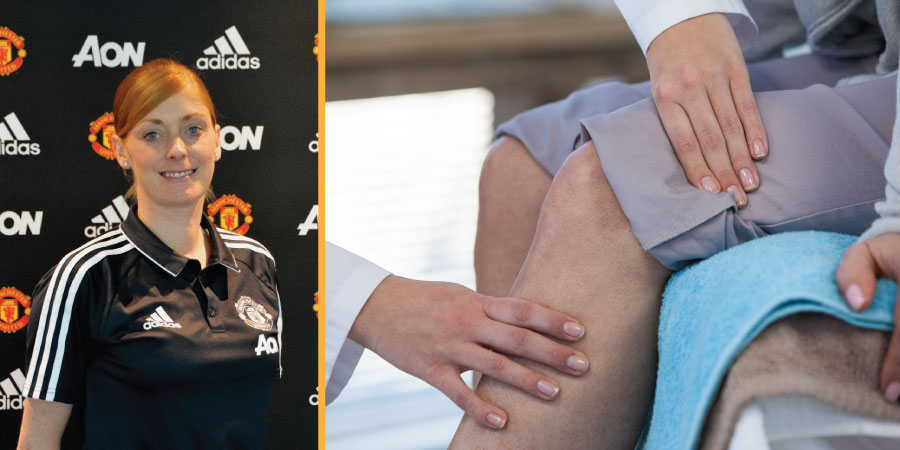
Diane is Head Physiotherapist for the Foundation and Youth Development Phases at Manchester United Football Club. Diane received her BSc (Hons) Physiotherapy from Manchester University in 2000 and worked in the NHS for the next decade. In 2010 she received her MSc in Musculoskeletal Physiotherapy from Manchester Metropolitan University.
Diane has been involved in academy football since 2004 initially working as a Casual Academy Physiotherapist at MUFC, progressing to her current role in 2010. During her time with MUFC, Diane has seen a significant expansion in the Academy system, managing the increasing medical requirements of an evolving Academy programme. Her role is to ensure that paediatric injuries are managed appropriately whilst considering growth and maturation and ensuring that the long-term athletic development of the player takes precedent over short-term gains.
Diane is a Visiting Senior Lecturer at Manchester Metropolitan University. She is an FA Affiliate Medical Tutor for the English Football Association and has taught on international sports trauma management courses for SPORTS ER. Diane has recently had three chapters published in ‘A Comprehensive Guide to Sports Physiology and Injury Management’. These chapters introduce concepts around working in an elite football academy along with diagnosing and managing paediatric injuries. Diane is currently involved in supporting research around Cardiac Profiling in Academy footballers.
Diane’s presentation ‘Tackling paediatric injuries’, focused on paediatric sports injuries, both the common presentations and those that are not to be missed! Diane discussed the importance of clinical reasoning skills to accurately diagnose and treat injuries.
Introduction to Paediatric Sports Injuries
Diane commenced her presentation with some key points about paediatric sports injuries, noting that paediatric injuries are unique with specific terminology and problems linked to growth.
Growth & Maturation
Diane provided insight into the three types of the age of children:
- Chronological age
- Biological age
- Psychological age
The maturation status of children can vary from their chronological age and this can be most apparent during peak high-velocity stages of growth. It is important for coaches and medical teams to consider each child’s maturation status.
Child-Centred Assessment
Diane described a child-centred approach to physiotherapy assessment and how this involves the child, parents, and interdisciplinary team (IDT). Subjective assessment can be used with pain scales which support an evidence-based approach to injury assessment.
Communication
Diane described the importance of effective communication with children to ensure they can express their feelings and discuss their injuries effectively. Therapists should ask children for questions they have about their injuries and encourage them to think, “What can I ask?”
Osteochondroses
These injuries affect bone growth in children and adolescents and include Osgood-Schlatter’s, apophysitis and osteochondritis. Injuries may include Severs, Kholers and Freiberg’s. Osteochondroses are managed through education, physiotherapy, strengthening, podiatry, home exercises, modified sport, phased return to play and rest. The physios provide reassurance that with correct management, children can make a full recovery.
Fractures
Diane referenced the Ottawa rules for the assessment of the foot, ankle, and knee injuries. Fracture types may include Greenstick, Torus (buckle), Bow and Avulsion fractures. X-rays are particularly important for children to assess growth plates.
Serious and Sinister Paediatric Sports Injuries
Whilst rare, these injuries should not be discounted. Diane described some of the more serious and sinister injuries that those working in sports rehabilitation should be aware of.
Pars defect/ spondylolysis is a stress fracture of the lower spine and can be a cause of lower back pain in children and adolescents.
Slipped upper femoral epiphysis is when the head of the upper femur slips off the joint in a backwards direction.
The following types of the tumour should be considered during injury assessment:
- Osteosarcoma – bone cancer, found at the end of long bones.
- Ewing sarcoma – affects bones and tissue around bones.
- Rhabdomyosarcoma – forms in soft tissue, including skeletal muscle tissue.
- Testicular cancer – symptoms often include a painless swelling or lump.
Inflammatory arthropeses can include:
- Ankylosing Spondylitis – long term inflammation of joints of the spine.
- Juvenile Idiopathic Arthritis – causes joint pain and inflammation. The specific cause is unknown.
Diane described some of the serious infections that should be considered including septic arthritis which is caused by synovial joint infection and osteomyelitis which is a bone infection.
Diane also explained the importance of being aware of safeguarding concerns linked to non-accidental injury. This could be linked to repeated visits to the medical room where a child may be anxious to disclose an issue.
Whilst serious injuries are rare, Diane noted that professionals have a duty not to over-medicalise sports rehabilitation and to avoid excessive investigations. Sports rehabilitators should ensure that treatments such as sports taping are only utilised to support rehabilitation and return to play and that these treatments should not become long term requirements for players.
Paediatric Sports Injury Rehabilitation
Diane provided her top tips for evidence-based rehabilitation of paediatric sports injuries:
- Rehabilitation should be phased.
- Load should be graduated.
- Exercise rehab should be criteria-based.
- Exercises should be functional, starting simple and working towards more complex and dynamic movements.
- Training volume, intensity and duration all need to be considered.
- Activity should be appropriate.
- Make it fun! Use teamwork, challenges, rewards, incentives, consequences, and games.
Kids Will be Kids!
When working with children, Diane provided a reminder that kids will be kids. Despite guidance for rest and recovery, children will often go out and play with their friends anyway!
Q&A
Some great questions were put forward during the presentation which Diane kindly took the time to answer as follows:
Question 1 – What would your advice be in relation to Relative Energy Deficiency in Sport (RED-S)?
Answer – Please join the Injury Rehab Network event with Angela Jackson in June where Angela will be discussing the management of overloaded younger athletes.
Question 2 – Which tests would you use for Pars?
Answer – Subjective tests are recommended but back extension and side flexion tests may provide a pain response.
Question 3 – How would you increase loading with young players?
Answer – During peak high-velocity growth it is particularly important to continually assess players ability to cope. Education for parents is also important. More research is being developed in this area.
Question 4 – How would you manage rehab when only outdoor space is available?
Answer – Get back to basics with simple equipment and make sure young people have ownership/ choice over their rehab programme.
Question 5 – Do you use kinesiology tape?
Answer – This is not used in the academy and the principle with any sports taping is to ensure it is only used for a medical purpose. Players should not become reliant on the use of tape.
Question 6 – Does osteochondrosis usually occur bi-laterally or uni-laterally?
Answer – Can be unilateral or bilateral but commonly is worse on one side.
Question 7 – Do you communicate differently with children and parents?
Answer – Try to be consistent and open but sometimes there needs to be a balance to keep children motivated and to ensure parents are informed.
Learn More
Diane has contributed to the book, ‘A Comprehensive Guide to Sports Physiology and Injury Management.’ Diane recommends the book as a useful resource for anyone working in sports rehabilitation.
Follow Diane Ryding
Keep up to date with the latest from Diane Ryding on Twitter https://twitter.com/dryding
Please enter your details into the form below along with any questions or comments and a member of our team will be happy to provide you with more information:
Get in Touch
- Professor Joideep Phadnis – Treatment and Management of Elbow Injuries – Injury Rehab Network
- 2026 Injury Rehab Network Events
- Professor Robert Galloway – Reducing Medical Errors – Injury Rehab Network
- Steven Corbett – Management and Treatment of Shoulder Injuries in Sport – Injury Rehab Network
- Ali Emery – Sport Rehab & Medical Provision in UK Ice Hockey – Injury Rehab Network
- Dr Josh Berkowitz – Haematology in Sports Medicine – Injury Rehab Network
- Dr John Rogers – Bone Stress Injuries – Injury Rehab Network
- Dr Jon Houghton – Tendon Injuries – Injury Rehab Network
- Dr Andrew Harrison – Fracture Management – Injury Rehab Network
- Nick Metcalfe – Hamstring injuries: Lumbar spine and Pelvis considerations – Injury Rehab Network
- Nick Worth – The Medico-Legal Field in Elite Football/ Sports – Injury Rehab Network
- Dr Nicola Keay – Health and Hormones in the Master’s Athlete Age Group – Injury Rehab Network
- Female Athlete Health – Injury Rehab Network
- Dr Geoff Davies – Behind the Scenes with the WRU and British & Irish Lions Team Doctor – Injury Rehab Network
- Douglas Hammond – Facial Injuries in Sport – Injury rehab Network
- 2025 Injury Rehab Network Events
- Claire Robertson – Patellofemoral Update – Injury Rehab Network
- Colin Lewin – Soft Skills in Professional Sport – Injury Rehab Network
- Des Ryan – Youth Athletic Development – Injury Rehab Network
- Dr Carly McKay – Injury prevention in rugby and football: are we making any progress? – Injury Rehab Network
- Micki Cuppett – Clinical Pearls to Enhance Your Medical Examination Skills – Injury Rehab Network
- Dr. Ian Beasley – Ex-footballers Healthcare – Injury Rehab Network
- Siobhan O’Donovan — Busting Booby Traps — Injury Rehab Network
- Angela Jackson — Integrating Neurocognitive Rehab in to Return to Sport Protocols — Injury Rehab Network
- Dr Andrew Shafik — Working as a Doctor in English Football — Injury Rehab Network
- Dr Nicola Keay — Relative Energy Deficiency in Sport (REDs) — Injury Rehab Network
- Ian Hunt – Modern Management of Chest, Rib and Sternal Injuries in the Elite Athlete – Injury Rehab Network
- Dr Amit Mistry – Mental Health Challenges in Elite Sport – Injury Rehab Network
- Head Injuries and Sport
- Gerard Greene – Male Athletic Pelvic Health – Injury Rehab Network
- Geraint Griffiths – The Prevention of and Rehabilitation from Visually Related Sporting Morbidity – Injury Rehab Network
- Professor David Lloyd – Surgery for Groin Pain – The Lloyd Release Procedure – Injury Rehab Network Event
- 2024 Injury Rehab Network Events
- Jonathan Bell FRCS (ORTH) – Meniscus Tears and other Complex Injuries of the Knee – Injury Rehab Network
- Professor Rowena Johnson – Imaging of Groin and Hip Pain in Athletes – Injury Rehab Network
- Prehab & Rehab in Elite/ Professional Football – Injury Rehab Network Event
- Steve Phillips – Calf Muscle Injuries – Injury Rehab Network Event
- Grant Downie OBE – Maximising your Impact in the VUCA World of Professional Football – Injury Rehab Network Event
- Manchester FA and Sterosport Partnership Aims for Manchester to be the Safest Place to Play
- Dr Marwan Al-Dawoud – Concussion in Rugby – Injury Rehab Network Event
- How to Strap Your Ankle
- John Dickinson – Optimising Care for Asthma and Disordered Breathing Patterns in Athletes – Injury Rehab Network Event
- How to Apply Sports Tape to Your Knee
- Dr Wayne Diesel – My Long Walk to Retirement – Injury Rehab Network Event
- Rugby Union and Rugby League Mandatory Medical Equipment : 2023 Update and What to Buy
- Leanne Simoncelli – Optimising and Individualising ACLR Rehabilitation – Injury Rehab Network Event
- Lessons from Working in Elite Football – Injury Rehab Network February 2023
- The Most Common Hockey Injuries and How to Prevent Them
- How to Treat Common Hockey Injuries
- Andy Williams – ACL Reconstruction in Professional Athletes – A Surgeon’s Perspective – Injury Rehab Network Event
- Steve Simbler MRPharm.S – Medicines Management in Sport – Injury Rehab Network Event
- Hockey and Ice Hockey Injury Statistics
- Essential Hockey Safety Equipment
- How to Perform a Risk Assessment for Sports: The Ultimate Guide (Including Examples and Template)
- How to Treat Common Cycling Injuries
- Preventing Common Cycling Injuries
- Professor Iain Hutchison – Sporting Facial Injuries and Treatment Delivering Speedy Recovery – Injury Rehab Network Event
- Hockey First Aid Kit Contents List
- Hockey First Aid Kits
- How to Treat Common Netball Injuries
- Gary Bloom – Why do Players Suddenly Experience a Catastrophic Loss of Form – Injury Rehab Network Event
- Dr Monna Arvinen-Barrow – Rehabilitation of the Biopsychosocial Athlete – Injury Rehab Network Event
- How Can Common Netball Injuries be Prevented?
- First Aid Qualifications for Netball
- Netball First Aid Kits
- Netball First Aid Kit Contents List
- 2023 Injury Rehab Network Events
- Essential Safety Equipment for Cricketers
- Fiona Rosamond – Podiatry in Football – Injury Rehab Network Event
- Essential First Aid Skills for Cricket Coaches
- Common Cricket Injuries and How to Avoid Them
- Dr Carl Todd – Osteopathy in Football – Injury Rehab Network Event
- Dr Andrew Newton – Grass Roots Paediatric Sports Medical Issues – Injury Rehab Network
- Tom Parry – Nutrition in Premier League Football – Injury Rehab Network Event
- Cricket First Aid Kit Contents List
- A Guide to Cricket First Aid Kits
- Treatment and Prevention of Cauliflower Ear
- How to Treat Common Rugby Injuries
- Rugby First Aid Courses: Everything you Need to Know
- The Definitive Rugby First Aid Kit Contents List
- Taping Your Wrists for Football: Why and How
- Effective Prevention of Injuries in Football
- How to Treat Common Football Injuries
- Rugby First Aid Kits: Complete Guidance for Rugby Union and Rugby League
- Knee Injuries in Professional Football and Elite Sport – Injury Rehab Network Event
- Steve Kemp – Lateral Ankle Injuries in Professional Football – Injury Rehab Network Event
- Michael Blackie BDS – Oral Health Impact on Performance in Elite Sport
- The Best Football First Aid Courses Recommended by Experts – Courses your coaches should be taking and why
- Football First Aid Kit Contents List – What should yours contain to keep your football players safe?
- Boxing First Aid Kit Contents List
- Preventing and Treating Shin Splints
- 8 Essential Safety Tips for Boxing
- How to Apply Boxing Hand and Wrist Wraps
- Essential Boxing Safety Equipment
- How to Spot and Treat an ACL Tear
- How to Treat a Pulled Hamstring
- How to Treat a Groin Strain
- How to Treat a Sprained Ankle
- Essential Parts of Any Sports First Aid Kit
- Recommended First Aid Courses for Sport
- Essential First Aid Skills for Cyclists
- Cycling First Aid Kit Contents List
- Cycling First Aid Kits – A Complete Guide
- Mike Healy – Pitchside Care CPD – Injury Rehab Network Event
- David Fevre – Pitch Side Injuries: No Time to be Injured – Injury Rehab Network Event
- Diane Ryding – Physiotherapy in an Elite Football Academy: Beyond injuries – Injury Rehab Network Event
- The Strain of Christmas – A Busy Time for Physio’s
- Dr Imtiaz Ahmad: Football Club Doctor – An Evolving Role – Injury Rehab Network Event
- Diane Ryding & David Fevre at the Injury Rehab Network
- GB Maxibasketball and Sterosport Partnership Announcement
- Sterosport and FMPA Partnership Announcement
- 2022 Injury Rehab Network Events
- Dr Ian Horsley, Team GB Deputy Chief Physio, at the Injury Rehab Network
- Sign Up: Sports Taping and Kinesiology Taping Online Courses
- Dr Barry Monk – Sunshine and Skin Cancer – Injury Rehab Network Event
- Steve Miller – Calf Injury Rehabilitation – Injury Rehab Network Event
- Angela Jackson – Managing The Overloaded Younger Athlete – Injury Rehab Network Event
- Shoulder Injuries in Sport – Expert Q&A Injury Rehab Network Event
- Professor Bill Ribbans – The Athletic Ankle. When do Lax Ligaments Need Surgery? – Injury Rehab Network
- Diane Ryding – Tackling Paediatric Injuries – Injury Rehab Network
- What are the most common sports injuries? Top Ten (Part 2)
- What are the most common sports injuries? Top Ten (Part 1)
- The Athletes Shoulder – The Surgeons Perspective – Injury Rehab Network Event
- Dr Claire Minshull – Getting Efficacious About Rehab and Conditioning – Injury Rehab Network Event
- How to Conduct a Risk Assessment for the Return to Sport
- Return to sport: A complete guide on what to expect
- Types of Sports Tape and their Uses
- Gary Lewin, Expert Football Physiotherapist – Rehabilitation on the Road in Elite Sport – Injury Rehab Network Event
- Josh Quigley at the Injury Rehab Network
- 2021 Injury Rehab Network Events
- The Importance of the Partnership Between a Manager and a Physio
- Paul Lubas – The Pitch-Side Paramedic
- Returning to Work as a Sports Therapist After Coronavirus
- Hyde United FC and Sterosport Partnership Announcement
- Chorley FC and Sterosport Partnership Announcement
- British American Football and Sterosport Partnership Announcement
- Dave Fevre – Expert Chartered Sports Physiotherapist – Injury Rehab Network Event
- Does Kinesiology Tape Work?
- Here To Help When You Return To Sport
- Mike James at the Injury Rehab Network
- Hannah Dines Shares Details About Her Paralympic Cycling Programme
- Hannah Dines – Hills Thrills and No Chills on the Road to Tokyo 2020
- Dave Fevre at the Injury Rehab Network
- Hannah Dines – When an Athlete Switches Off
- Hannah Dines – Life Balance – How Friends Are Key to Elite Success
- University of Salford Sports Taping Courses
- Hannah Dines – Love Island, Laundry, Admin and Repeat – A Day in the Life of a Paralympian
- Injured? Here’s How Nutrition Can Help
- Sterosport – A New Approach to Sports Injuries
- Hannah Dines – Terminating Injury
- Injury Rehab Network NW Gets off to a Flying Start