


David Bartlett — Concussion: Advancing Management & Rehabilitation — Injury Rehab Network

The latest Injury Rehab Network event, delivered in partnership by Sterosport and BASRaT, featured a highly informative presentation from David Bartlett, Physiotherapist at the Institute of Sport, Exercise and Health.
The online event took place on the evening of Monday, 21 September. David explored the latest evidence-based approaches to concussion management and rehabilitation, with a particular focus on clinical reasoning, functional assessment and safer return-to-play decisions.
A central message from the session was that concussion management should not end when an athlete becomes symptom-free. Practitioners must consider the different systems that may have been affected and ensure that the athlete has recovered the functions required to perform safely in their sport.
The presentation recording is available to watch here.
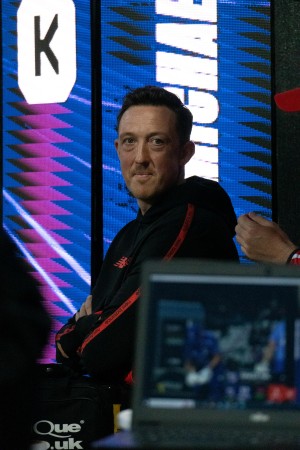
David Bartlett, Physiotherapist, Institute of Sport, Exercise and Health
David Bartlett is a physiotherapist specialising in sports medicine and concussion management. He is part of the Concussion Clinic at the Institute of Sport, Exercise and Health in London, where he works at the intersection of research, clinical practice and athlete care.
Alongside his clinical role, David is Lead Physiotherapist with Welsh Fire in The Hundred, providing player support in elite cricket. His work spans acute injury management, rehabilitation and performance optimisation, with a particular emphasis on brain health and concussion care in high-performance sport.
David has extensive experience supporting athletes across professional cricket, football and other elite environments. He is committed to advancing evidence-based approaches to concussion assessment and recovery and bridging the gap between clinical science and its practical application in sport.
Concussion: Advancing Management & Rehabilitation
Understanding concussion as a mild traumatic brain injury
David began by defining sport-related concussion as a mild traumatic brain injury induced by biomechanical forces. It may result from a direct impact to the head or from an indirect force transmitted through the body.
Concussion predominantly causes a functional disturbance rather than a structural injury that can be identified through standard neuroimaging. This makes functional assessment particularly important for physiotherapists, sports rehabilitators and other practitioners involved in an athlete’s recovery.
David explained that rapid head acceleration can stretch and shear brain cells, initiating a neurometabolic cascade. Changes in ion movement, mitochondrial function, cerebral blood flow and inflammation contribute to an energy crisis within the brain.
This process helps to explain why an athlete may require time to recover even when structural imaging is clear, or their symptoms begin to settle.
Rotational acceleration was highlighted as an especially important mechanism. Emerging technologies, including instrumented mouthguards, mathematical modelling and machine learning, are helping researchers to understand how forces are transmitted through the brain and what they may mean clinically.
Moving beyond symptoms and protocols
“If in doubt, sit them out” remains an essential safety principle during the initial management of a suspected concussion.
However, David emphasised that the subsequent assessment must involve more than simply asking whether an athlete still has symptoms or automatically moving them through a predetermined return-to-play protocol.
Headache, dizziness, difficulty concentrating, visual disturbance and problems with balance can arise from several affected systems. Following a rapid head acceleration, practitioners may need to consider:
- Mild traumatic brain injury
- Cervical spine involvement
- Vestibular dysfunction
- Ocular-motor dysfunction
- Cognitive or autonomic disturbance
- Mental health and psychological factors
Protocols provide a valuable safety framework, but they should support rather than replace clinical reasoning. The practitioner’s task is to identify the athlete’s functional impairments and use those findings to guide individualised rehabilitation.

Using SCAT6 and SCOAT6 effectively
David discussed the roles of the Sport Concussion Assessment Tool 6 (SCAT6) and the Sport Concussion Office Assessment Tool 6 (SCOAT6).
SCAT6 supports structured assessment during the acute stage following a suspected concussion. SCOAT6 provides a framework for a more detailed clinical assessment after the initial period and encourages practitioners to examine domains including the cervical spine, vestibular and ocular-motor function, balance, cognition, autonomic function and mental health.
Neither tool should be viewed as a simple symptom checklist or used in isolation. Their greatest value is in helping practitioners organise their clinical reasoning and recognise where further assessment or referral may be required.
For on-pitch assessment in football, David also highlighted FIFA FOCUS, the Football-Specific Standardised On-Pitch Concussion Assessment Protocol. The Concussion Recognition Tool 6 remains an accessible option for recognising suspected concussion when appropriately qualified healthcare professionals are unavailable.
The cervical spine
One of the strongest messages from the presentation was that practitioners must assess the neck following a rapid head acceleration.
Symptoms, including headache, pressure in the head and neck pain, may be associated with cervical spine dysfunction. These symptoms can overlap with those commonly attributed to concussion, making careful differential assessment essential.
Assessment may include:
- Active and passive cervical range of motion
- Palpation and symptom reproduction
- Cervical strength and neuromuscular control
- Joint-position error testing
- Cervical proprioception
- The relationship between neck movement, vision and balance
Where cervical involvement is identified, rehabilitation can incorporate deep neck flexor and extensor exercises, resisted movements, proprioceptive training and exercises integrating the cervical, visual and vestibular systems.
Vestibular and ocular-motor assessment
The vestibular and ocular-motor systems play an important role in balance, spatial awareness and the ability to maintain a stable visual target while the head and body are moving.
David encouraged practitioners to become familiar with the Vestibular/ Ocular Motor Screening assessment or VOMS. This can help identify symptom provocation during tasks assessing smooth pursuits, saccades, convergence, gaze stability and visual-motion sensitivity.
These functions are particularly important in sport. An athlete may need to follow a fast-moving ball, scan the playing environment, make rapid decisions and maintain visual control while running, turning or changing body position.
An athlete can therefore feel symptom-free in daily life while still displaying subtle deficits that affect their performance or safety during competition.
Balance assessment is another important part of this process. Traditional tests such as the Balance Error Scoring System can be useful, while a more detailed assessment may consider postural control in different head and neck positions.
Objective assessment and technology
David demonstrated how concussion assessment is becoming increasingly measurable.
Technologies such as digital cervical range-of-motion assessment, eye tracking, and postural sway measurement can provide objective information about an athlete’s recovery. When baseline information is available, clinicians can compare post-injury performance with the athlete’s normal function rather than relying solely on general reference values.
Objective measures may assist with:
- Identifying subtle functional impairments
- Monitoring changes across rehabilitation
- Supporting communication with athletes and coaches
- Informing return-to-training and return-to-play decisions
- Identifying when further specialist assessment is needed
David was also clear that advanced equipment is not essential for good concussion care. Many cervical, vestibular, ocular-motor and balance assessments can be completed without expensive technology.
The same principle applies to rehabilitation. Technology may improve measurement and repeatability, but effective rehabilitation continues to depend on sound assessment, appropriate exercise selection and progressive exposure to the demands of the athlete’s sport.

Rehabilitation and return to performance
Concussion rehabilitation should no longer be viewed as a passive process in which the athlete simply rests and waits for symptoms to disappear.
Once the affected domains have been identified, rehabilitation can target the athlete’s individual impairments. This may include:
- Cervical strength, control and proprioception
- Smooth-pursuit and saccadic eye movements
- Vergence and visual tracking
- Gaze-stability exercises
- Vestibular rehabilitation
- Balance and postural-control exercises
- Progressive aerobic exercise
- Cognitive and dual-task challenges
- Sport-specific visual and movement demands
Rehabilitation should gradually recreate the tasks the athlete must perform in training and competition. A successful return to sport requires more than symptom resolution; the athlete must be able to tolerate fatigue, process information, control their body and complete sport-specific skills safely.
David compared this with the management of a muscle injury. Practitioners would not return an athlete following a hamstring injury simply because the athlete reported feeling better. Objective strength, running and performance criteria would normally be considered. A similarly robust approach should be applied following a concussion.
This is particularly important because research has identified an increased risk of subsequent musculoskeletal injury following concussion. Residual sensorimotor, balance, visual or processing deficits may contribute to this risk if they are not identified before return to play.
Mental health, sleep and fatigue
Changes in mood and mental health can occur following a concussion and should form part of a comprehensive assessment.
David discussed how anxiety about concussion and its potential long-term effects may influence a person’s recovery. Vestibular dysfunction may also interact with systems involved in emotional regulation.
Education can help athletes understand their symptoms, reduce unnecessary fear and remain actively engaged in rehabilitation. Where concerns are identified, referral to an appropriately qualified mental health or neuropsychology professional may be required.
Fatigue and sleep should also be monitored. During recovery, the brain may need to work harder to complete tasks that were previously automatic. An athlete who performs well when rested may experience greater difficulty when cognitive or physical fatigue increases.
A multidisciplinary approach
Concussion care frequently requires input from several professionals.
Depending on the athlete’s presentation, the multidisciplinary team may include:
- Sports medicine doctors
- Physiotherapists and sports rehabilitators
- Vestibular therapists
- Neurologists
- Orthoptists or ophthalmologists
- Neuropsychologists
- Mental health professionals
- Strength and conditioning practitioners
David advised practitioners to work within their competence and refer when an athlete’s needs extend beyond their own scope of practice. Persistent vestibular symptoms, significant visual disturbance, severe or worsening headaches, complex psychological concerns or an unusual recovery pattern may all require specialist input.
Q&A highlights
David answered a wide range of questions from practitioners following the presentation. Topics included:
- The importance of specialist vestibular assessment for persistent symptoms
- The relative significance of rotational and linear head acceleration
- Integrating SCAT6 and SCOAT6 findings with cervical, vestibular and ocular-motor assessment
- Forthcoming adaptations of concussion assessment tools for para-athletes
- Whether management should differ between male and female athletes
- Supporting concussion care in amateur sport without advanced technology
- Managing athlete and coach expectations around return to play
- The role of physiotherapists where a club doctor is not available
- The emerging but currently limited evidence surrounding creatine supplementation
- The effects of fatigue and sleep on recovery
- The potential value of ocular-motor baseline testing in elite sport
A recurring message was that limited access to technology should not prevent good care. Free assessment tools, a thorough history, physical examination and structured clinical reasoning can provide a strong foundation for concussion management at every level of sport.
Education is equally important. Helping athletes and coaches understand why recovery cannot be reduced to a fixed number of days can make it easier to manage expectations and prioritise long-term health.
Take-home points
David concluded with several important messages for practitioners:
- Always prioritise safety when a concussion is suspected.
- Consider the mechanism of injury, including rotational acceleration.
- Do not rely on symptoms alone to judge recovery.
- Assess the cervical, vestibular, ocular-motor, cognitive and psychological domains.
- Use SCAT6 and SCOAT6 as clinical reasoning frameworks rather than as isolated pass-or-fail tests.
- Identify the athlete’s specific functional impairments before selecting a rehabilitation program.
- Make rehabilitation progressive and relevant to the demands of the athlete’s sport.
- Use objective data where available, but do not let a lack of technology prevent a thorough assessment.
- Work within a multidisciplinary team and refer appropriately.
- Return to play should mean a return to function and performance, not simply the absence of symptoms.
Thank you to David Bartlett for sharing his knowledge and practical insight, and to everyone who attended and contributed questions during the session.
Further information and follow David Bartlett
For more information, visit:
Presentation recording
The full presentation and audience Q&A can be viewed here
2026 Injury Rehab Network events
Find out about and register your interest in all Injury Rehab Network events with BASRaT planned for 2026
Please enter your details into the form below, along with any questions or comments, and a member of our team will be happy to provide you with more information:
Get in Touch


Related Insights
 Adventure
Dr Saul Konviser — Oral Health in Sport: An Integrated Approach to Athlete Wellbeing — Injury Rehab Network
The latest Injury Rehab Network event, delivered by BASRaT and Sterosport on Monday, 12 October...
 Adventure
Sarah Perris — HerACLJourney — Injury Rehab Network
On Wednesday, 2 September, the Injury Rehab Network welcomed Sarah Perris, Founder of HerACLJourney, alongside...
 Adventure
Pitchside to Ringside: Essential First Aid Kits for Contact Sports
Guest Article written by Combat Sports Hygiene There's a crucial moment every contact sport shares...